Pages

Wednesday, April 24, 2013

Back from California

Nikon D600, Nikkor 70-700 VR, 6 shot vertical panorama


It was my first trip to California and I have to say I was blown away by it's beauty. The diversity of beauty is what really has me jealous though. My wife and I did a kind of a mad dash across California. It was great to see the great diversity in landscape, but I really want to take a more focused approach next time.

We started in Yosemite and saw the great valley cliffs and mountains which included vast wilderness. Then we went to Monterrey and saw the coast as we drove through Big Sur down the Pacific Coast Highway 1. I have to say I was very surprised by the epic drive on Highway 1. I knew it would be a nice drive, but it was down right insane. We had clouds rolling in off the ocean which then made a steep climb up the mountain and over the road. We saw this rising of the clouds for most of the drive and it was awesome. I have to say that Yosemite was beautiful, but I knew it would be. I was surprised by Big Sur though, it's beauty was unexpected.

The next leg of the tour was to Los Angles which was not photography related but still an area in which a photographer could enjoy a wealth of subjects.

In coming posts I'll share some photos as well as time lapses that I took. I'm new to time lapses and will share what I learned. I also did a bit of work at night for the first time. I ran into some unexpected problems there as well and will share my experiences. So stayed tuned!

To stay informed with what I'm up to please follow me on the various social networks on the right of the page!

Saturday, March 23, 2013

6 Tips for an Efficient Trip

Can you feel the excitement? I can! Yes, I'm going to Yosemite in just a few weeks. Actually I will be visiting Yosemite as well as the California coast between Monterey and Los Angles. It feels a little odd, I normally put some sort of photo at the top of my blog posts. But I've never been to Yosemite or anywhere in California, so I don't have any photos to use. Well, I'll have to change that won't I.

That's right, new content is coming soon. I'm spending two nights in Yosemite, one night in Monterey and a couple more in LA. Many of you may be able to relate with this scenario... This is a vacation/photography trip. The vacation part is where the photography gets limited. Many of us that don't get to travel as much as we'd like, so we end up splitting time between photography and spending time with our family. This is where it becomes extremely important to be efficient with your time. Here is a short list of things you can do to prepare for an efficient trip.

  1. 500px.com is not just a website with beautiful images. It can also be an excellent source to give you an idea of what people are shooting in a specific area. As with all photography communities you'll see a lot of similar images from the popular locations. This is fine, and if it's the first time you've been there, you'll want to hit the hot spots. There is usually other helpful information as well. Much of the images metadata is shown which can often tell you what focal lengths are used and what time of the year it was shot at.
  2. Google Drive. Wait what? Yes, Word documents, Dropbox, Evernote, or any other note taking method will work. I have created a document which has names of locations, maps, hiking trails and travel times. There are links to 500px for reference photos and other websites which may be helpful. Many of these note taking services have apps on your phone so you can reference it in the field.
  3. Google+ Community feature is another excellent place to go for information. There are many passionate photographers who are eager to help others and share information. There may be a community that focuses on the particular area where you are traveling. Any questions you may have or tips you can gather will be invaluable on the trip. This strategy can be extended to other online communities.
  4. Google Maps and Google Earth. No really, this isn't a google advertisement. This may be obvious but checking drive times to various locations is very important. You can also get a pretty good lay of the land by familiarizing yourself with the area. You'll want which way is north and more importantly which way the sun will be rising and setting.
  5. The Photographer's Ephemeris along with Maps, this will really help you get a handle of where the sun will be rising and setting. TPE is a iOS and Android App which will show the sun and moon angles from any given location and time. So with this app, you'll know exactly how to get that sunrise shot as efficiently as possible.
  6. Stellarium is a free open source planetarium that can be downloaded on your Windows PC, Mac or Linux. You might wonder why this is important. Well, I'm very excited to try some night photography while in Yosemite. With the night shots I want to include both the beautiful scenery as well as the beautiful glow of the stars and Milky Way. With this program, similar to TPE, I can type my location and time and it will show me where the stars will be located in the night sky. If I want to get the Milky Way in the shot, I will know when the best times will be. Similarly, it will show me the exact position of the moon at various times of the night. The moon can be helpful or an obstruction depending on what type of shot you want. This tool will take some of the guess work out.
This has been my workflow for the past month or so. With our busy schedules, efficiency one of the most important aspects of a successful trip. A good research and planning process becomes key. I hope this list helps make your trip a successful one.

Thursday, February 21, 2013

Nikon D600; Initial Thoughts

So I decided to upgrade from my Nikon D7000 to a Nikon D600. I blogged previously while I was thinking about getting an Olympus OM-D. As my obsessive personality requires, I did a good amount of research regarding the D600 before making my purchase. I'll go through what I've seen so far and what led to my decision. It should be noted that just because I decided to upgrade from the D7000 to the D600 doesn't mean that it's the correct decision for everybody.

On the surface the camera's look pretty similar. Even when you dig into some of the specs you find a lot of similarities. They both look and feel pretty similar with similar button functions and placement. Although I immediately noticed that the [Zoom - / Qual] button and [Zoom + / ISO] button were inexplicably reversed. So every time I was reviewing an image and wanted to zoom in or out I was always pressing the wrong button. And if I tried to change the ISO, yep, always pressed the wrong button. I'm sure I'll get over it.

On with other specs.. They both have dual card slots and share the 39 pt AF system. But the real reason you buy the D600 is for the sensor. My first trek out with the D600 was our local zoo which was a dark and cloudy day. It was actually a trip with my wife and son, but I just couldn't resist testing out the new camera. I have to say I'm speechless at the high ISO capability. I've gone from the D50 to the D40x then D90, D7000 and now D600 and I've never been so impressed. (The jump from the D40x to the D90 was very impressive). In the past there was a scale on when you'd be willing to use your higher ISO. So like if you were shooting a common species you'd be willing to go to maybe 800 ISO, beyond that, you'd probably just be better off waiting for better light. But if it was it was a rare species then you didn't care, anything to get a shot for the archive... crank that thing up to 6400 ISO... Never post it online and make sure you view it with the door closed so nobody else will ever see it.

But this is different. I shot a few at 3200 ISO and then 6400. I even accidentally shot at Hi + 0.3 which is ISO 8063. I couldn't believe it, color and detail looked very good. The D600 slides up the ISO chart smoothly with very impressive results. Here is the full image and a couple of crops @ 100% (Forgive the shot... it was through a mesh net..)
Nikon D600 w/ 70-300VR @ 180mm, f/5.6, 1/50 sec (handheld) ISO 8063
ISO 8063 @ 100%
ISO 8063 @ 100%
I'll have a chance to give the camera a real workout with a couple of months when I travel to Yosemite National Park in April. So you can be sure that I'll share my experiences here.

I think I'll just leave it at that for now. People might be thinking about switching to FX from the D7000. But now with the announcement of the D7100, there are going to be even more comparisons to come. Hopefully I'll get my hands on a D7100 for a direct comparison.

Stay tuned!

Wednesday, February 13, 2013

Best North American Landscape...


If you could go anywhere in North America for landscape photography... Where would you go? I've only really photographed a few areas, all of which I love. Minnesota's North Shore, Yellowstone, Grand Teton NP, and Banff National Park. I have an upcoming trip to plan, of which I only have four days. Should I go back to a place I've already been and refine my photography? Or should I explore a new National Forrest or National Park?

If you could pick one place to go to photograph landscapes in 2013, where would you go? If you already picked a favorite place, where did you pick? I've decided this is a fun game... so play along! :)

Please respond in the comments or on Google +

Thursday, January 31, 2013

OM-D and Me.. Not Meant to be..

I wanted to do a follow up to my previous entry with regards to the Olympus OM-D. See "Pondering Olympus OM-D" for that article.

Previously I went through some of the features and thought about the many benefits of the OM-D. And the fact is, I really was pondering whether or not I should stick with my Nikon system or ditch it for Micro Four Thirds.

I've always felt that my place in photography was a little bit different than most. One example of this is that for most photographers, portraits, weddings, travel etc.. the 70-200 or 24-70 range are perhaps the most important. Whereas for me, I always wanted the longer and longer and longer focal length, to get up close to the wildlife. So where some would ponder upgrading their 70-200 f/2.8 VR to the 70-200 f/2.8 VR II, I would contemplate if I should step up from my 300mm f/4 to a 300mm f/2.8 etc. Some would hold FX cameras in very high regard, but I always wanted the extra reach of the crop factor. Therefore a D300S replacement was my holy grail.

After pondering the OM-D for a while and trying not to get myself sucked into whats new, cool and popular. I decided I really should be looking at is what's best for the type of photography that I want to do. So what kind of photography do I want to do?

2012 was a year off, photography wise. Late 2011 brought the birth of my first child and all of 2012 was my wife and I learning how to be parents and adjusting to our new lives. Of course, I broke out the camera to get baby photos. But as far as nature photography goes, it was a quiet year. Over the course of that year I think my photography desires changed a little bit. I decided I wanted less of a focus on wildlife and a stronger focus on landscapes, night photography and time lapse. I also have become interested in travel photography. I don't travel as much as I'd like, but it's one thing that my wife and I really enjoy doing together. So that is a photographic opportunity I don't want to pass up.

So how would the OM-D fit into this slightly different role? I would say that it would have fallen into the roll wonderfully, with one exception. The fact that I didn't want to say good bye to wildlife photography altogether. I simply want to refocus my attention on landscapes as my primary subject. Although the Micro Four Thirds system does have the benefit of a 2x crop factor, it still falls short in autofocus and selection of quality super telephoto prime lenses. Now, what would happen if a micro four thirds 300mm f/4 lens came out? That would be the equivalent of a 600mm f/4? Wowsers! That would be pretty insane. It may not address the AF issues, but it should be known that the AF issues will be addressed over time.

In the end I decided to go with what's best for me now, not what could be best if this, this or this happened. And what's best for me now is a camera that has a feature set that would excel in landscape photography, night photography and time lapse. A camera that would be good for photographing my now 1 year old boy as well as be a good travel camera. A camera that would still be able to become an excellent wildlife camera when paired with one of the many great super telephoto lenses available.

So what did I choose? Stay tuned

Wednesday, January 9, 2013

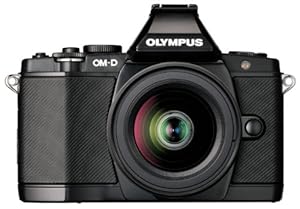
Pondering Olympus OM-D E-M5

The Olympus OM-D E-M5 is an interesting camera. Initially I wrote off the whole micro four thirds segment and thought it just a more advanced "Point and Shoot" camera. In my mind I placed them just below the entry level DSLR's. To be honest, I haven't given it much thought since.

Enter this week's guest interview on This Week in Photo podcast. Scott Bourne who was an original host of the podcast and has been an inspiration of mine for years. Now Scott is onto other things but as I was browsing my podcast feeds, I noticed he was making a guest appearance. Scott mentioned a lot of interesting things about this Olympus camera, many of which got me thinking.

It should be noted that at this point I have never used the camera and so these are just my initial thoughts on the subject. Scott mentioned that the OM-D has excellent image quality especially when paired with some of the high quality prime lenses. The Olympus M.Zuiko 12mm f/2 has been getting rave reviews. So have the 45mm and the 75mm. In fact, Scott mentioned that the Olympus M.Zuiko 75mm f/1.8 may be the sharpest lens he's tested, and believe, he's tested everything. See the full blog post at Photofocus.com. What makes this even more interesting is a kit with some of these lenses may cost less than a DSLR set up.

So begins my internal dialogue. If a micro four thirds camera, when paired with the correct lens, can have as good of image quality as anything... Certainly it must be as good as my Nikon D7000. If that's true, what new possibilities could this smaller camera offer? The more portable frame is much more likely to be with me. I can't tell you how many times I've brought my camera bag, but end up leaving it in the car. For me, bringing a camera means bringing a backpack.

Thinking of those great prime lenses, I could do many types of photography at professional quality. I could photograph my son (1 year old), do other portraits and landscape photography, plus the added portability.  As someone accustomed to DSLR's, having a quality electronic viewfinder is a nice benefit. Shooting video through a viewfinder is more natural for me and offers better stability. Currently, I use a LCDVF which works well but adds even more heft to the rig. Whether it's casual video of my son, or wildlife or nature video for this website, I think it's an advantage over DSLRs.

As with everything there is a negative. I've seen multiple reviews that mention that although the autofocus for static or slow moving objects is very fast, however, tracking fast moving subjects, such as sports and wildlife is problematic. Scott mentions in a recent blog post on his personal website, ScottBourne.com that the AF can be a bit dodgy tracking wildlife, but his conclusion was that it is possible.

But there is benefit with mico four thirds system and wildlife photography. A 2x crop factor. This means I could use the Olympus 75-300mm f/4.8 which would be a 150-600mm equivalent on a 35mm format. If only somebody would make a 300mm f/4 on the micro four thirds system. This would be a 600mm f/4 equivalent. It would likely be a fraction of the price and a fraction of the size.

I also want to mention the added benefit of having a new camera to get excited about photography. I know we all probably focus too much on gear, but lets be honest, for some of us, it's part of the fun. I've heard it before, if your creativity gets stale, or your passion fades, a new toy can give it a spark. I have to say, whether I buy the OM-D or not, I like the idea of it, what it brings to the table, has indeed sparked my interest.


Friday, December 21, 2012

Happy Holidays from Natural Vision Photography!

Grey Wolf, West Yellowstone, MT
Gray Wolf, West Yellowstone, MT

It has been a long time since our last post but we did not forget about our fans. We wanted to take this time and wish you all a safe and happy holidays!